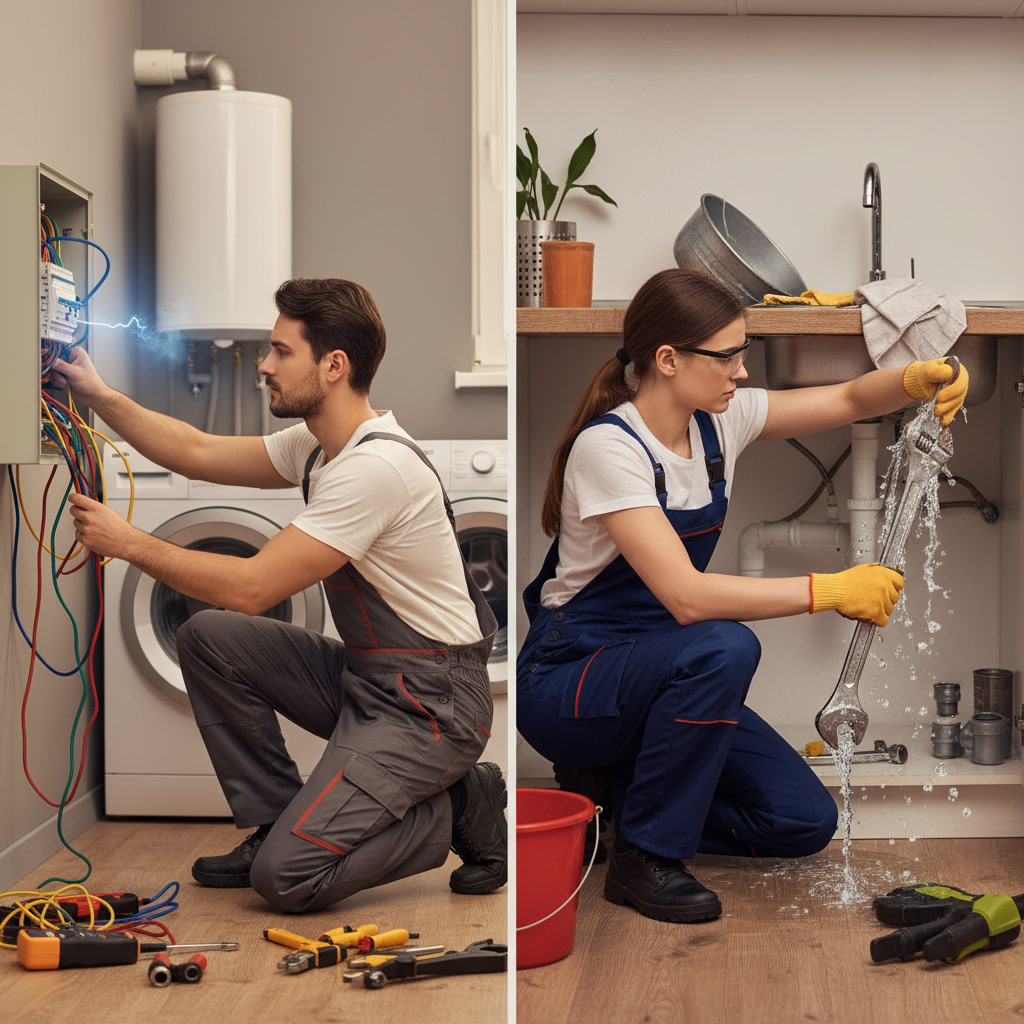
When something goes wrong in your home, the first challenge is figuring out who to call. Many household problems share similar symptoms but require completely different trades. Understanding whether you need an electrician or plumber depends on recognizing the root cause of the issue, not just the visible symptoms. The right diagnosis saves you time, money, and prevents a service call that ends with the technician saying they can’t help you.
Why Misdiagnosing Your Home Problem Costs You
Calling the wrong professional wastes your time and theirs. Electricians arrive to find leaking pipes. Plumbers show up to find faulty wiring. Each appointment costs you a service call fee and delays the actual repair by days. Beyond the frustration, some problems worsen while you wait. A small water leak near an electrical outlet becomes a safety hazard if not addressed by the right trade in the proper sequence.
The confusion often stems from overlapping symptoms. Water near an outlet could be a plumbing leak or condensation from an electrical issue. A noise in the wall might be vibrating pipes or a buzzing electrical component. Learning to distinguish these signs protects your home and your budget.
The Basic Dividing Line Between Electrical and Plumbing Work
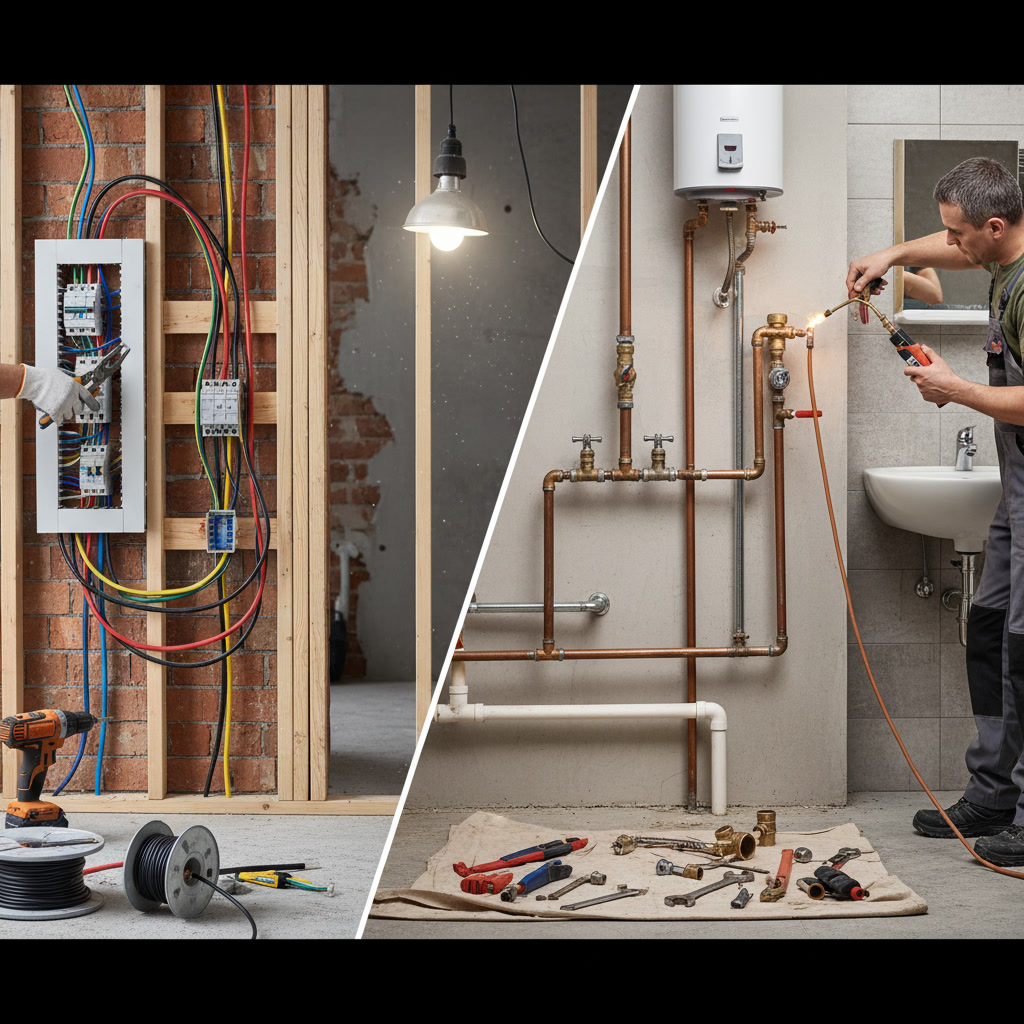
The simplest rule is this: if it involves electricity flowing through wires, circuits, panels, or devices, you need an electrician. If it involves water flowing through pipes, drains, fixtures, or appliances that heat or move water, you need a plumber. The confusion arises when appliances like water heaters, dishwashers, or garbage disposals have both electrical and plumbing connections.
For hybrid appliances, the specific symptom determines the trade. A water heater that leaks water from the tank requires a plumber. The same unit that trips your breaker or shows no power needs an electricician. Some jobs require both trades working in sequence, especially during installations or major upgrades.
Clear Signs You Need an Electrician
Call an electrician when you notice flickering lights, outlets that feel warm to the touch, breakers that trip repeatedly, or any burning smell near electrical devices. Sparks from outlets, switches that shock you, or buzzing sounds from your electrical panel all indicate electrical problems that need immediate attention.
Less obvious signs include lights that dim when appliances turn on, outlets that don’t work in multiple rooms, or older homes with two-prong outlets throughout. These symptoms suggest your home needs electrical service upgrades or panel work to handle modern electrical loads safely.
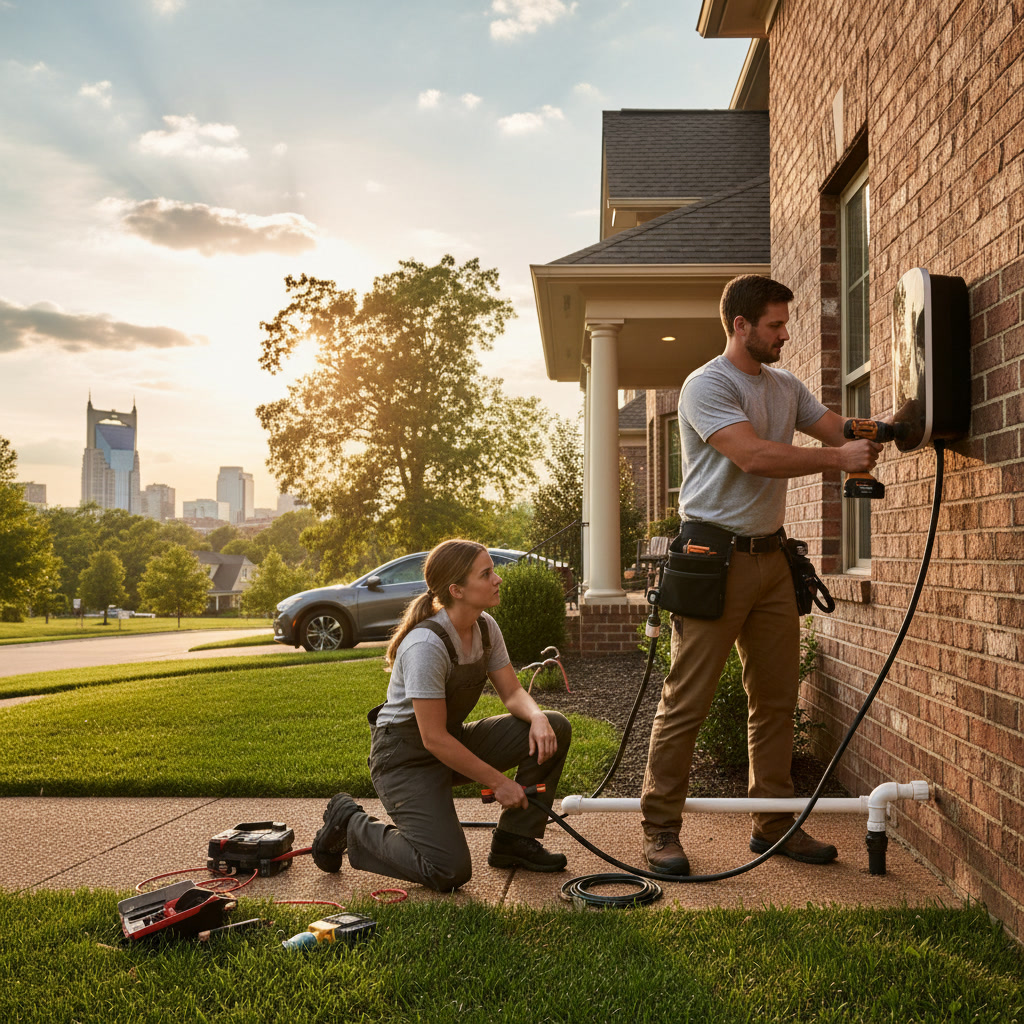
If you’re planning to install an electric vehicle charger, outdoor lighting, a hot tub, or any new high-draw appliance, an electrician evaluates your current capacity and performs any necessary upgrades. Many Nashville area homes built before 2000 require panel upgrades to support these modern conveniences.
Clear Signs You Need a Plumber
Water where it shouldn’t be is the most obvious plumbing sign. Dripping faucets, running toilets, water stains on ceilings or walls, and puddles under sinks all point to plumbing issues. Slow drains, gurgling sounds from pipes, low water pressure, and discolored water also fall under plumbing territory.
Your water heater shows several plumbing-specific symptoms: rust-colored water, inconsistent temperatures, loud popping or rumbling sounds, or visible corrosion on the tank. While some water heater problems involve electrical components, the tank itself and all water connections require plumbing expertise.
Outdoor issues like sprinkler malfunctions, hose bibs that leak or freeze, and sewer line backups all require a plumber. If you smell sewer gas inside your home, that’s a plumbing emergency that needs immediate attention to protect your health.
When the Problem Involves Both Trades
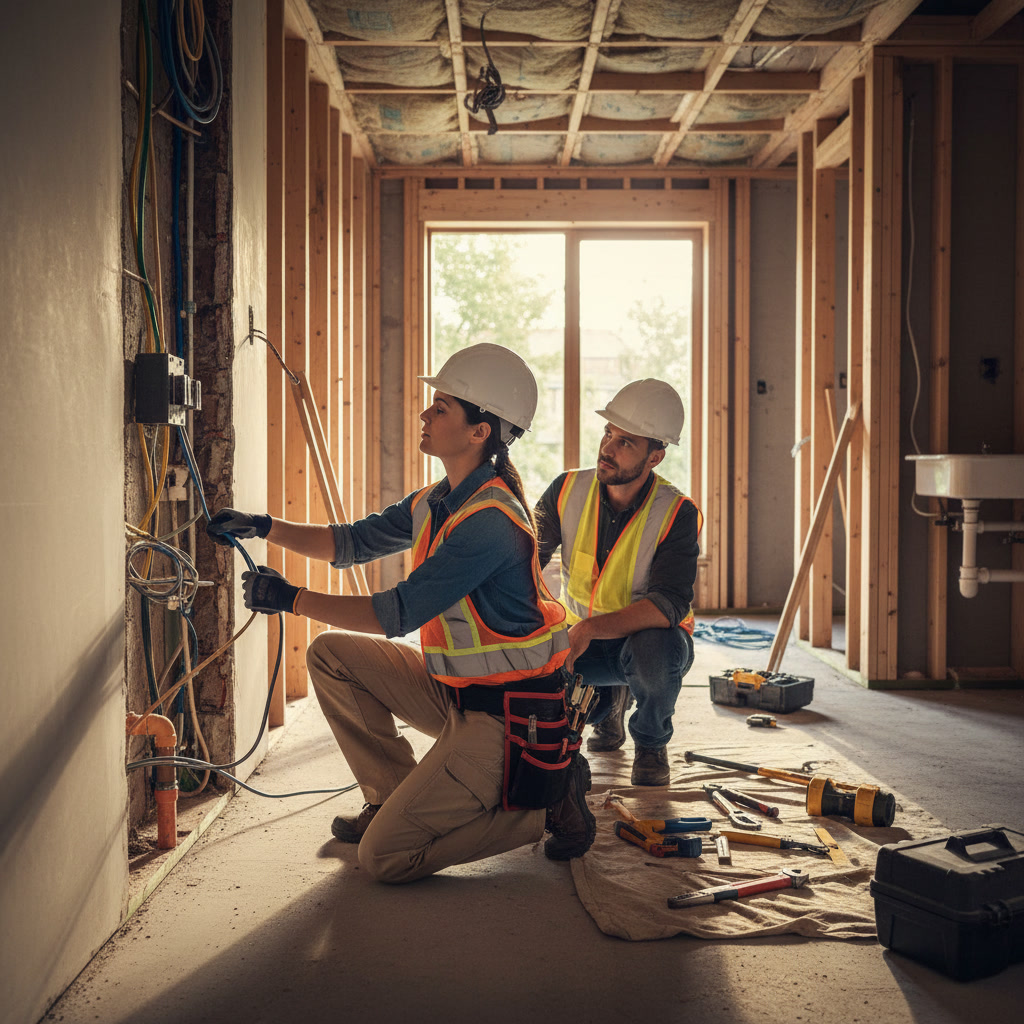
Some situations genuinely require both an electrician and a plumber. Installing a new water heater means disconnecting and reconnecting both water lines and electrical or gas connections. Adding a bathroom requires routing new water supply and drain lines plus installing electrical outlets, lighting, and ventilation fans.
Kitchen remodels often need coordinated work between trades. The dishwasher needs water supply, drain connections, and electrical power. The garbage disposal requires plumbing connections and a dedicated electrical circuit. Refrigerators with ice makers need both a water line and proper electrical service.
Working with a company that provides both services, like Black Cat Electric and Plumbing, eliminates coordination headaches. One team handles the entire project instead of juggling two separate contractors with different schedules and communication styles.
Diagnosing Problems in Franklin Homes by Room
Different rooms produce different clues. In the kitchen, if your disposal hums but won’t spin, that’s likely a plumbing jam. If it’s completely silent with no power, check your electrical panel first. A dishwasher that won’t fill points to plumbing, while one that won’t start suggests electrical issues.
Bathroom problems usually divide cleanly. Toilet issues are plumbing. Exhaust fan problems are electrical. A bathtub that drains slowly needs a plumber, but a GFCI outlet that won’t reset needs an electrician. Combination fixtures like whirlpool tubs require evaluating whether the motor won’t run (electrical) or the jets are clogged (plumbing).
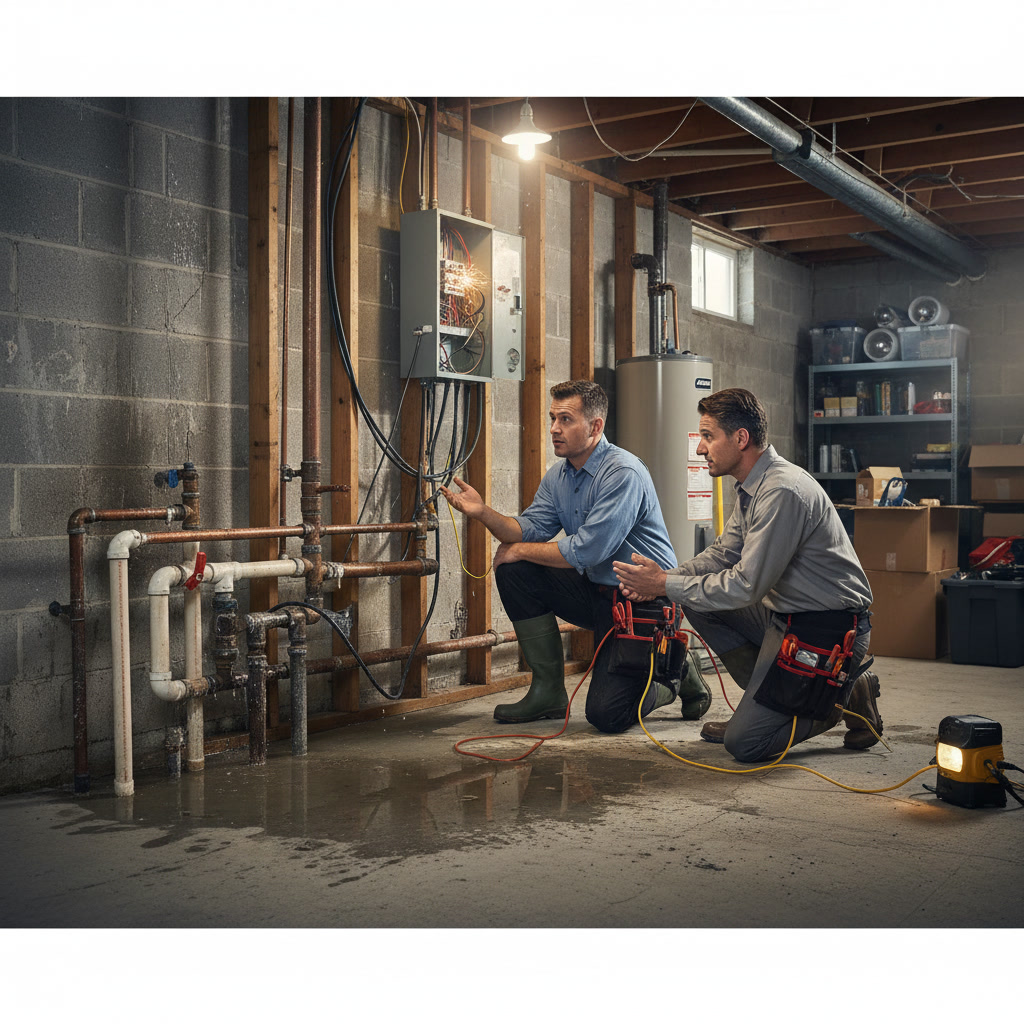
In your basement or utility room, a water heater replacement project reveals which trade you need. Water pooling at the base means the tank has failed internally. No hot water with no error codes might mean a tripped breaker or bad heating element.
What to Check Before You Call Anyone
Before scheduling a service call, perform basic diagnostics yourself. For electrical issues, check your breaker panel to see if a circuit has tripped. Reset it once. If it trips again immediately, you have a real problem that needs professional attention. Don’t keep resetting a breaker that trips repeatedly.
For plumbing issues, locate your main water shutoff valve before an emergency happens. If you see active leaking, shut off the water to that fixture or to the whole house if needed. Check under sinks for shut-off valves on supply lines. Knowing how to stop water flow prevents damage while you wait for help.
Look at the age of your systems. Water heaters typically last 8 to 12 years. Electrical panels from the 1980s may need replacement. If your home still has galvanized steel plumbing or aluminum wiring, you’re likely facing bigger upgrades beyond simple repairs. Understanding your home’s infrastructure helps you have informed conversations with contractors.
The Voltage and Water Heater Confusion
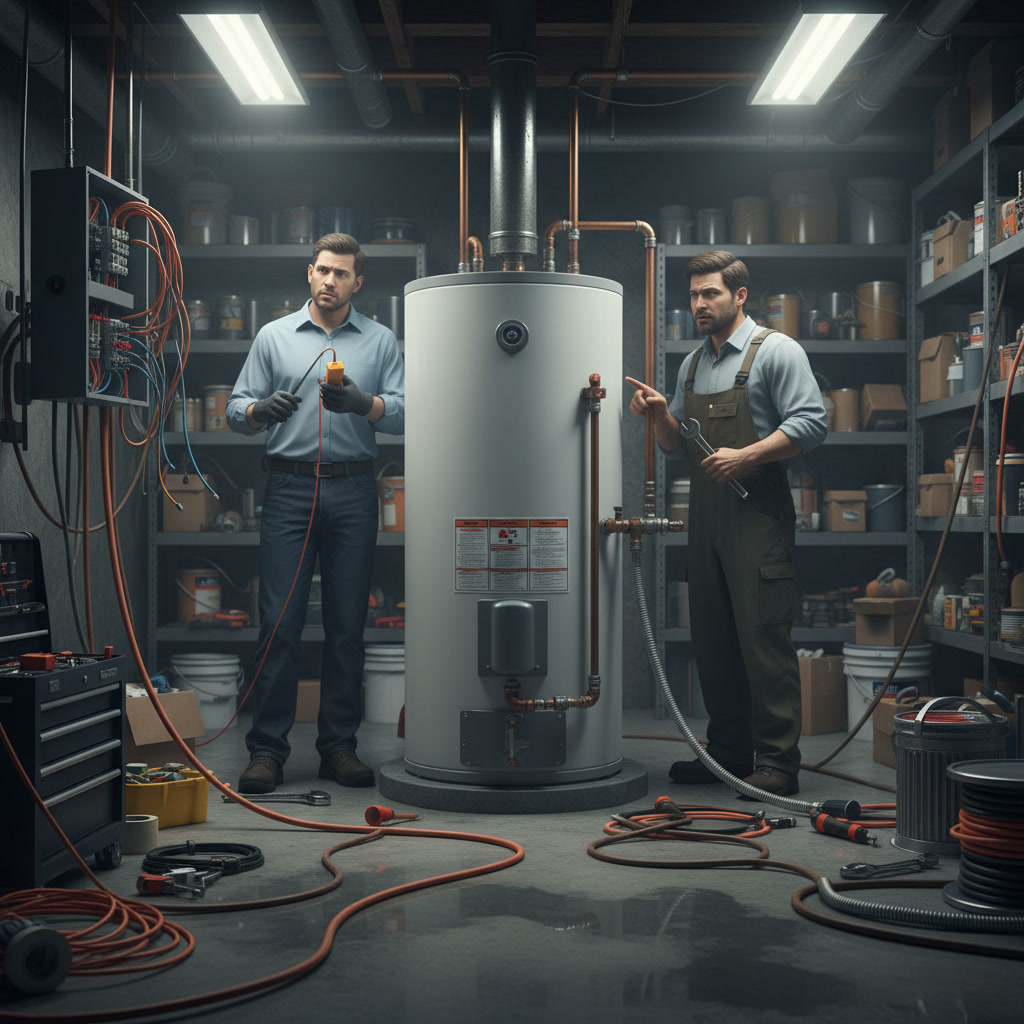
Water heaters create more confusion than almost any other appliance because they combine both trades so intimately. Electric water heaters have heating elements powered by 240-volt circuits, while the tank and all water connections are pure plumbing. Gas water heaters have mostly plumbing components but may have electronic ignition systems requiring electrical troubleshooting.
Here’s the expert insight most homeowners miss: if your electric water heater stops producing hot water and you hear no unusual sounds, test the breaker first. Many service calls for water heater repair are resolved by simply replacing a tripped breaker or a failed heating element, both electrical issues. The plumber can’t fix those components.
Conversely, if your water heater makes popping, rumbling, or hissing sounds, you’re hearing sediment buildup or pressure problems inside the tank. That’s a plumbing issue. The tank may need flushing or the temperature and pressure relief valve may need replacement. No amount of electrical work will solve internal tank problems.
Safety Issues That Demand Immediate Action
Some problems need emergency response regardless of the trade involved. If you smell gas, evacuate immediately and call the gas company. If you see sparks, smoke, or flames from any electrical device, shut off power at the breaker and call an electrician. If water is actively flooding your home, shut off the main water valve and call a plumber.
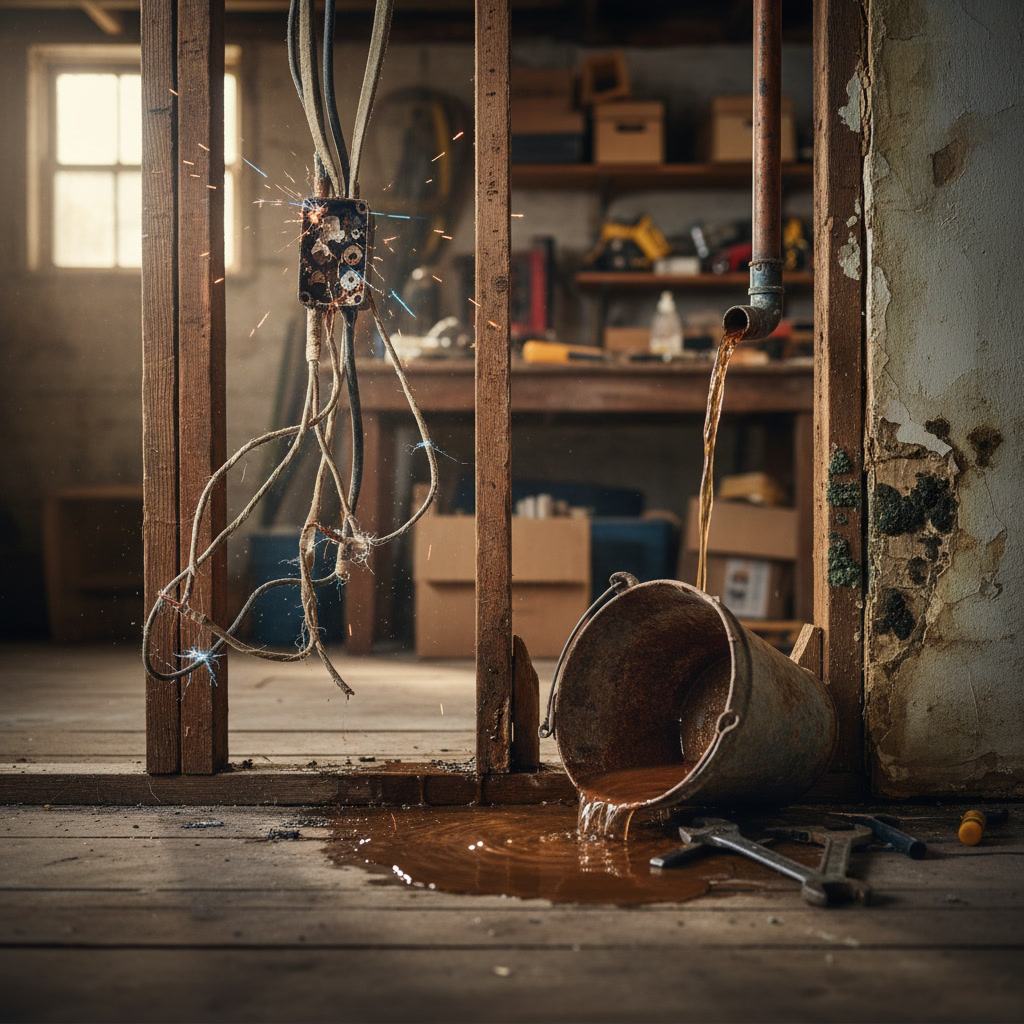
Water and electricity together create life-threatening hazards. If you see water near electrical outlets, breaker panels, or appliances, don’t touch anything. Shut off power to that area at the breaker panel if you can do so safely, then address the water source. This situation often requires both trades working together, starting with stopping the water and securing the electrical safety.
Never ignore burning smells, whether they smell like burning plastic, wood, or something metallic. These odors near outlets, switches, or inside walls indicate overheating wiring that can cause house fires. Turn off power to the affected area and schedule emergency electrical service.
How Dual-Service Companies Simplify Your Decision
When you’re not certain which trade you need, companies offering both electrical and plumbing services provide a safety net. You can describe your problem, and the dispatcher routes the right technician to your home. If the problem turns out to involve both systems, you’re already working with a team that can address everything.
Black Cat Electric and Plumbing serves homeowners throughout Franklin, Brentwood, Murfreesboro, and surrounding Nashville areas with this exact approach. Licensed in both trades and veteran-owned, the company was founded specifically to solve the communication and trust problems homeowners face when dealing with contractors.
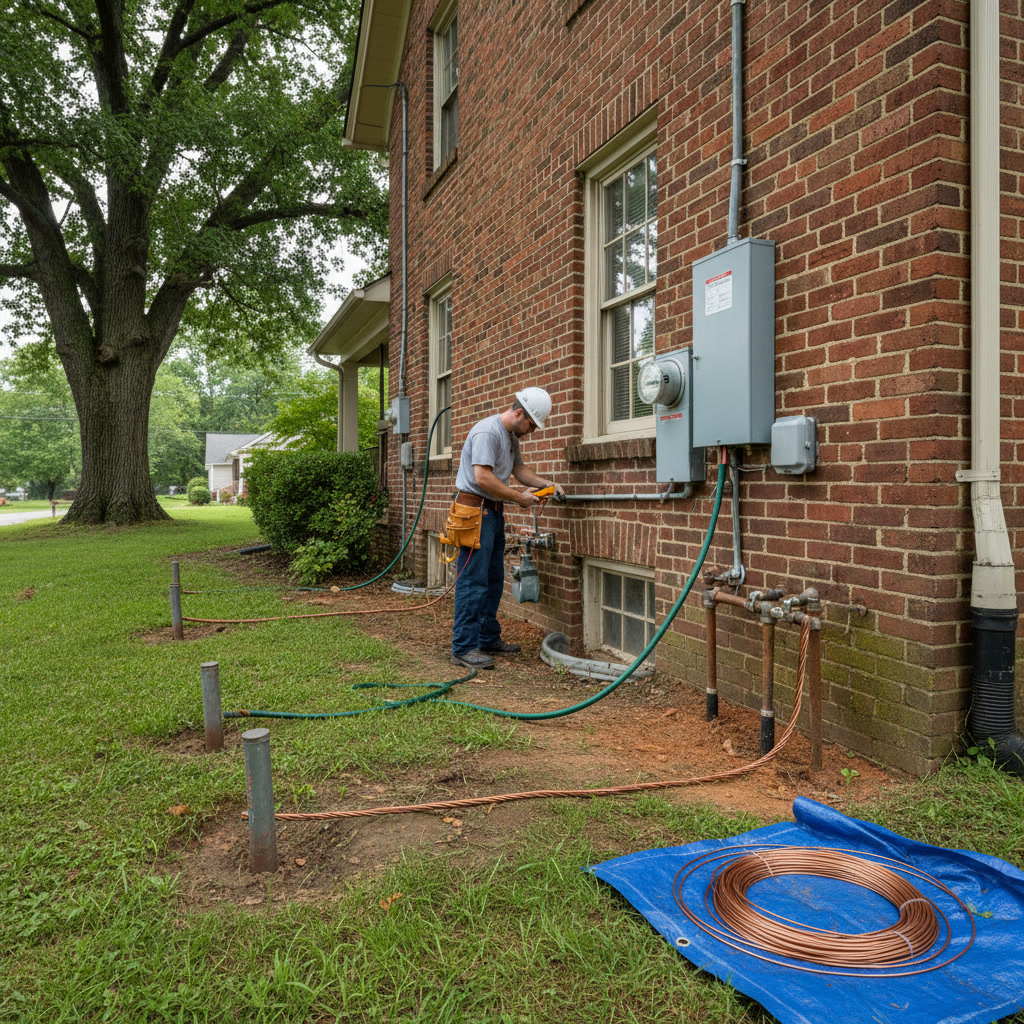
Dual-service providers also catch problems the other trade might miss. While installing a whole-home surge protection system, an observant technician might notice corroded plumbing connections near the panel. While replacing a hose bib, a technician might spot an outdoor outlet that’s not weather-rated. This comprehensive view of your home’s systems adds real value beyond the immediate repair.
Getting the Right Help for Your Home
Understanding the difference between electrical and plumbing problems protects your home, your budget, and your time. Most issues show clear symptoms once you know what to look for. Water, drains, and fixtures belong to plumbers. Wiring, circuits, and electrical devices belong to electricians. Appliances that use both systems require evaluating the specific symptom to determine which trade addresses the root cause.
When doubt remains, choosing a contractor who handles both trades eliminates the guesswork. You get the right professional on the first call, and complex projects that span both systems move forward without coordination delays or finger-pointing between separate companies.
If you’re facing a home problem and need help determining the right solution, reach out to a team that understands both electrical and plumbing systems from the ground up. Call (615) 479-0327 to speak with someone who can point you in the right direction and schedule service that actually solves your problem the first time.