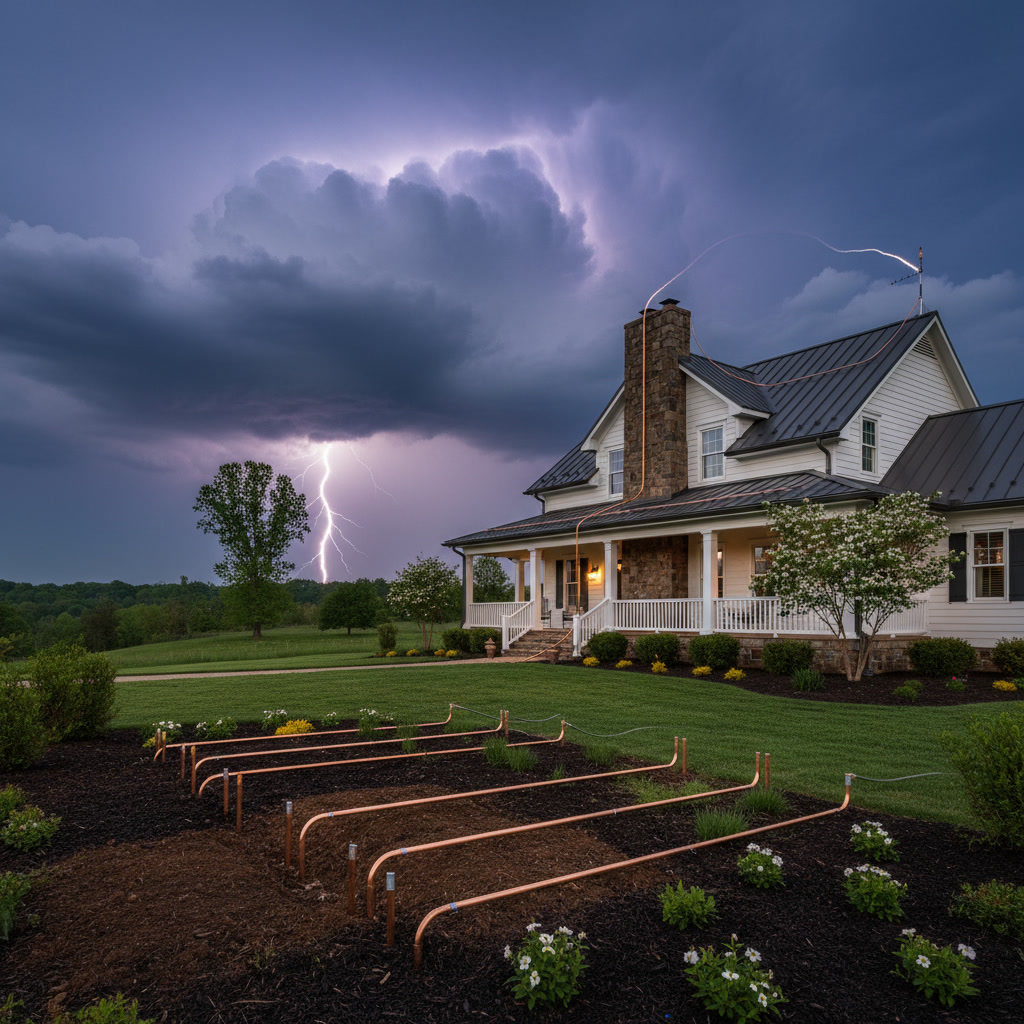
Middle Tennessee ranks among the most active regions in the United States for thunderstorms and lightning strikes. Every summer, powerful storms roll through Nashville and the surrounding areas, bringing thousands of lightning events that can devastate unprotected homes. Grounding system protection serves as your home’s first line of defense against these electrical surges, directing dangerous current safely into the earth before it can damage your wiring, appliances, or worse.
This guide explains exactly how grounding works, why Middle Tennessee homes need robust protection, and what signs indicate your system needs attention. You’ll understand the science behind grounding, the components involved, and how it works alongside other safety systems to keep your property secure.
Why Middle Tennessee Faces Higher Lightning Risk
The geography and climate of Middle Tennessee create perfect conditions for severe thunderstorms. Warm, humid air from the Gulf of Mexico collides with cooler systems moving across the region, generating powerful electrical activity from April through September.
The National Weather Service records an average of 40 to 50 thunderstorm days per year in the Nashville area. During peak season, some weeks see daily afternoon storms rolling through communities from Franklin to Murfreesboro. Each storm brings multiple lightning strikes, with ground strikes posing the greatest risk to residential electrical systems.
Lightning carries between 20,000 and 200,000 amperes of current, enough to instantly overwhelm any electrical system it contacts. Without proper grounding system protection, this energy follows your home’s wiring, destroying everything in its path including panels, outlets, appliances, and electronics.
How Grounding System Protection Actually Works
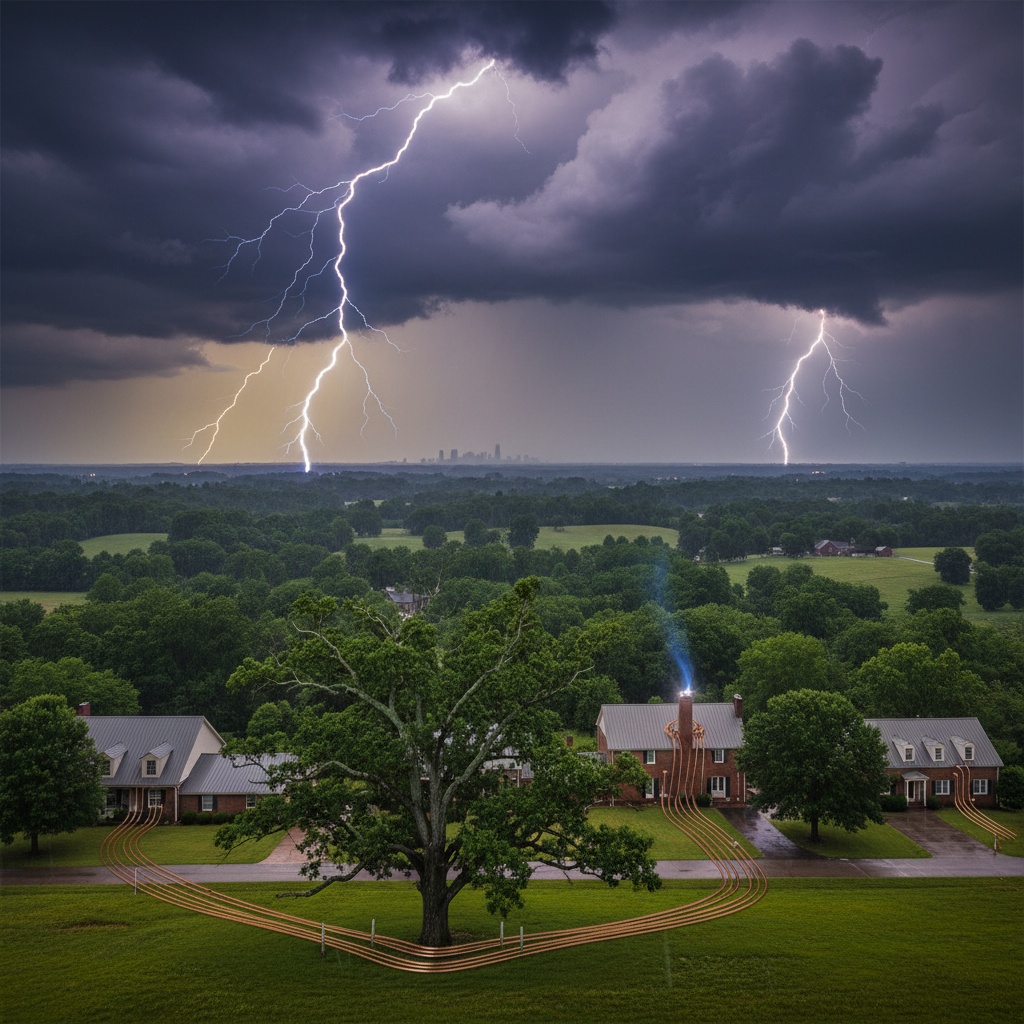
A grounding system creates an intentional, low-resistance path that directs electrical current directly into the earth. When lightning strikes your home or nearby ground, the system channels that massive energy surge away from your wiring and into the soil where it dissipates harmlessly.
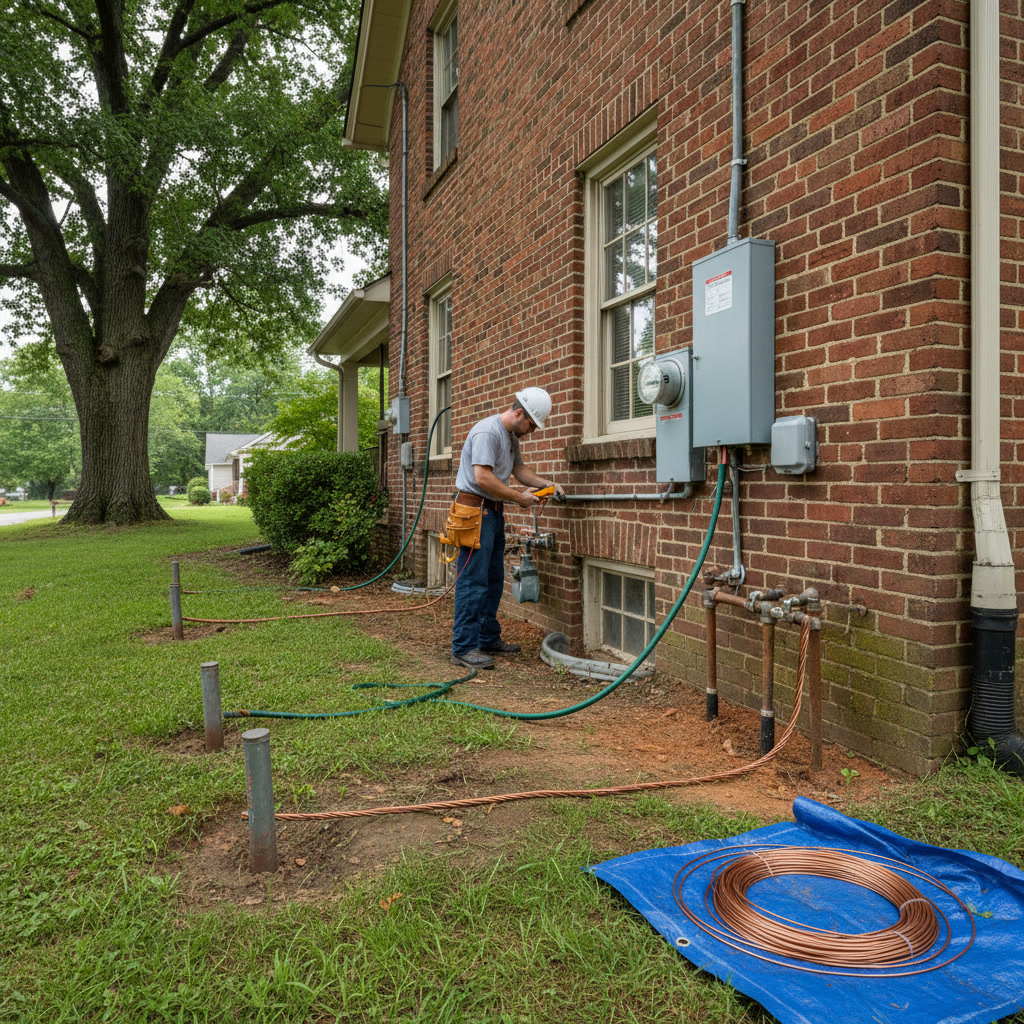
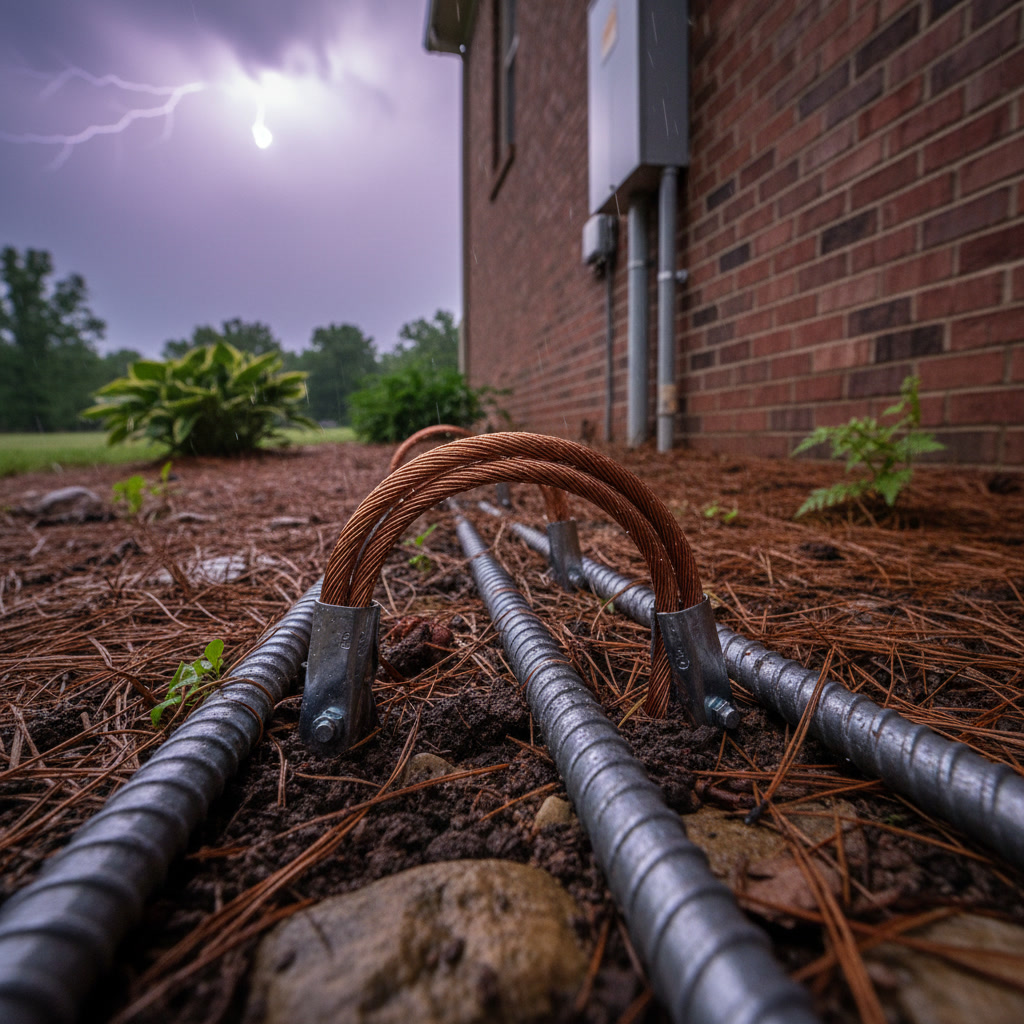
The system consists of three main components working together. First, grounding electrodes buried in the earth around your foundation provide the physical connection to ground. These typically include metal rods driven 8 to 10 feet deep or copper wires buried in your foundation’s concrete.
Second, grounding conductors connect your electrical panel and metal components throughout your home to these electrodes. These heavy-gauge copper or aluminum wires create the pathway for fault current to follow.
Third, bonding connects all metal systems in your home (plumbing pipes, gas lines, structural steel, electrical boxes) to the grounding system. This prevents dangerous voltage differences between metal objects during a surge event.
Pro Tip: Grounding system protection works hand-in-hand with whole-home surge protection devices. Grounding provides the path for current to escape, while surge protectors clamp voltage spikes before they reach sensitive electronics.
The Science Behind Lightning and Ground Current
Lightning doesn’t have to strike your home directly to cause damage. In fact, most lightning-related electrical problems come from ground strikes near your property rather than direct hits.
When lightning hits the ground within several hundred feet of your home, the current spreads outward through the soil in all directions. This creates a voltage gradient, with the highest voltage at the strike point gradually decreasing with distance.
If your home sits within this affected area, current can enter through underground utility lines, metal pipes, or your home’s grounding system itself. Without proper grounding system protection, this current has nowhere safe to go and flows through your electrical system instead.
A properly designed grounding system equalizes these voltage differences. By bonding all metal systems together and connecting them to earth through low-resistance electrodes, the system prevents dangerous current from jumping between different metal components or following your electrical wiring.
Components of a Complete Grounding System
Grounding Electrodes
Modern homes use multiple grounding electrodes for redundancy and lower overall resistance. The most common type is the ground rod, typically made of copper-clad steel and driven vertically into the soil to a depth of eight feet minimum. Most installations use two rods spaced at least six feet apart.
Homes with concrete foundations often incorporate a concrete-encased electrode (sometimes called a Ufer ground). This consists of at least 20 feet of bare copper wire encased in the foundation concrete, which provides excellent contact with the earth.
Metal underground water pipes also serve as grounding electrodes when they have at least 10 feet of direct earth contact. However, many modern subdivisions use plastic water service lines, eliminating this grounding path.
Grounding Electrode Conductor
This heavy copper or aluminum wire connects your electrical panel’s neutral bus to the grounding electrode system. The size depends on your electrical service capacity, typically ranging from 6 AWG for smaller services to 2/0 AWG for 400-amp panels.
This conductor must be continuous (no splices) from the panel to the electrode connection point and protected from physical damage. Proper installation matters because any weak point in this conductor compromises your entire grounding system protection.
Bonding Jumpers
Bonding jumpers connect all metal systems in your home to the grounding system. This includes water pipes, gas pipes, metal HVAC ducts, and structural steel. These connections prevent voltage differences between different metal systems during a fault or lightning event.
Signs Your Grounding System Needs Attention
Most homeowners never think about their grounding system until something goes wrong. Watch for these warning signs that indicate your grounding system protection may be inadequate or failing.
Frequent circuit breaker trips during storms suggest your system cannot safely handle surge current. If multiple breakers trip simultaneously during thunderstorms, the surge energy may be following your electrical wiring rather than a proper grounding path.
Unexplained electronics failures after storms indicate surge current reaching your devices. While individual device failures happen, a pattern of multiple appliances or electronics dying after lightning activity points to grounding problems.
Tingling sensations when touching metal appliances, pipes, or fixtures reveal dangerous voltage on metal surfaces. This serious safety hazard requires immediate professional evaluation of your grounding and bonding connections.
Older homes built before modern grounding standards may lack adequate grounding system protection entirely. If your home was built before 1970 and hasn’t had electrical service upgrades, your grounding system likely doesn’t meet current safety standards.
Grounding Requirements for Modern Electrical Systems
The National Electrical Code (NEC) sets minimum standards for grounding systems, and these requirements have become more stringent with each code update. Understanding current standards helps you evaluate whether your home’s protection is adequate.
Every electrical service must connect to a grounding electrode system. The code requires at least two ground rods (or one rod plus another electrode type like a concrete-encased electrode) to provide redundant earth connections.
Ground rod resistance should measure 25 ohms or less to earth. If a single rod tests above this value, the code requires a second rod. Professional electricians use specialized ground resistance testers to verify your system meets this standard.
All metal systems must bond to the grounding system. This includes obvious items like electrical boxes and panels, but also plumbing systems, gas lines, and even metal siding or roofing in some situations.
Homes undergoing major electrical work must bring the entire grounding system up to current code. This means older homes getting electrical panel upgrades often need complete grounding system improvements at the same time.
Key Takeaway: Grounding system protection isn’t a one-time installation that lasts forever. Corrosion, soil changes, and physical damage can degrade system performance over time. Professional testing every few years ensures your protection remains effective.
Special Considerations for Middle Tennessee Soil
Soil composition directly affects grounding system performance because earth resistance varies dramatically based on soil type, moisture content, and mineral composition. Middle Tennessee’s limestone bedrock and clay soils present specific challenges for effective grounding.
Clay soils, common throughout the Nashville area, offer relatively good conductivity when wet but become highly resistive during dry summer months. This seasonal variation means grounding systems that test adequately in spring may perform poorly during summer thunderstorm season.
Shallow limestone bedrock in areas like Brentwood and Belle Meade limits ground rod depth and increases resistance. Professional installers sometimes need to drive rods at angles or use chemical enhancement to achieve acceptable resistance values.
Proper grounding system protection in challenging soil conditions may require additional ground rods, longer conductors buried horizontally in trenches, or chemical ground rod treatment to improve earth contact. Licensed electricians evaluate soil conditions during installation to design systems that perform reliably year-round.
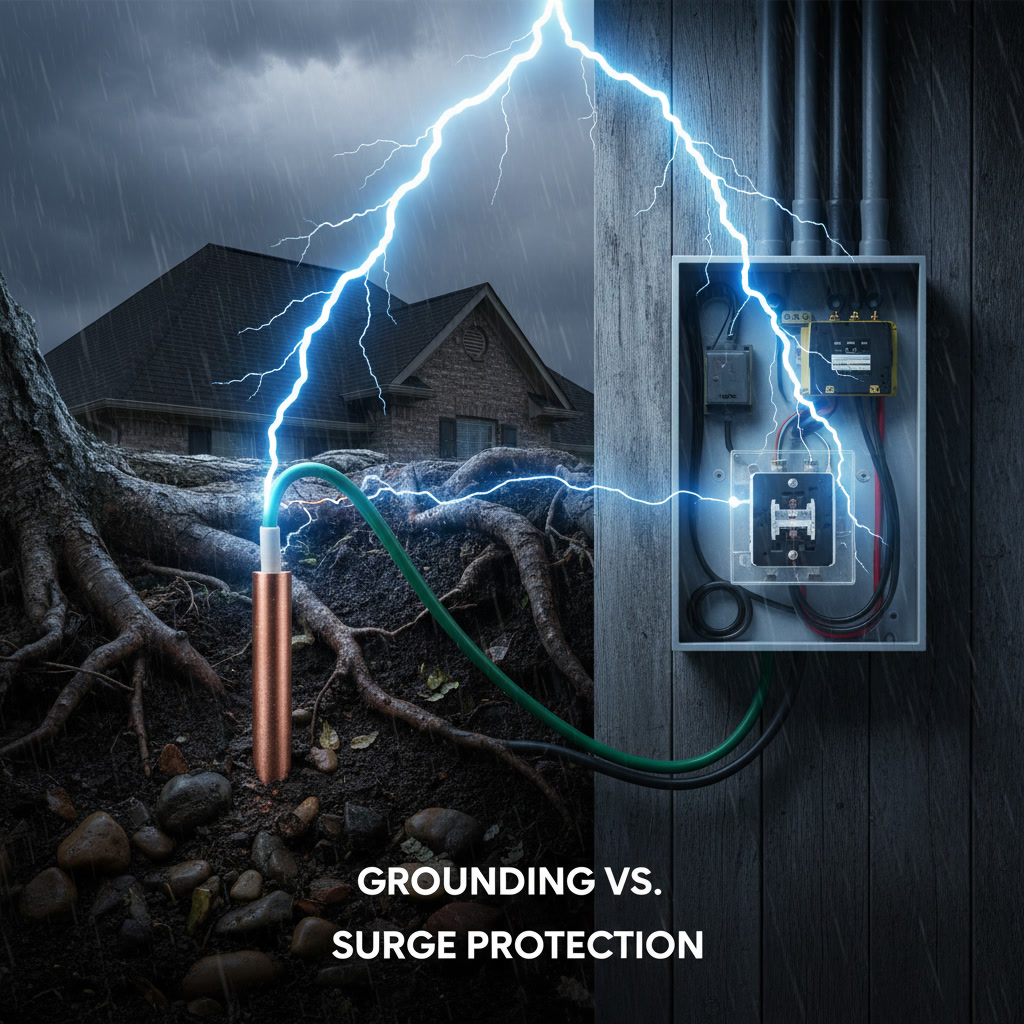
Grounding vs. Surge Protection
Many homeowners confuse grounding system protection with surge protection, but these systems serve different (though complementary) functions in protecting your home from lightning damage.
Grounding provides a physical path for electrical current to flow into the earth. It handles the massive amperage of lightning strikes by routing that energy away from your home’s wiring and into the ground where it dissipates safely.
Surge protection devices clamp voltage spikes to safe levels before they reach sensitive electronics. They cannot handle the full energy of a lightning strike, but they protect against the smaller surges that grounding alone might not prevent from reaching your devices.
The two systems work together as layers of protection. Grounding handles the bulk of lightning energy, preventing catastrophic damage to your electrical system. Surge protectors then clean up residual voltage spikes that make it past the grounding system, protecting computers, appliances, and entertainment systems.
For comprehensive protection, Middle Tennessee homes need both systems properly installed and maintained. A robust grounding system installation combined with whole-home surge protection at the panel creates the most effective defense against storm-related electrical damage.
Professional Installation and Testing
Grounding system protection is not a DIY project. Proper installation requires specialized knowledge, tools, and testing equipment that professional electricians use to ensure code compliance and effective performance.
Licensed electricians evaluate your home’s specific conditions including soil type, electrical service capacity, and existing grounding infrastructure. They design systems that meet or exceed code requirements while accounting for local environmental factors.
Professional installation includes proper sizing of all conductors, secure connections at every junction point, and correct bonding of all metal systems. Small installation errors can compromise the entire system’s effectiveness, leaving your home vulnerable despite having grounding components in place.
Testing verifies that the completed system performs as designed. Electricians measure ground resistance, test bonding connections, and verify that all metal systems connect properly to the grounding electrode system. This documentation proves code compliance and gives you confidence in your protection.
Black Cat Electric and Plumbing provides professional grounding system installation throughout Middle Tennessee. Our licensed electricians understand local soil conditions and code requirements, ensuring your home receives protection that performs reliably when storms strike.
Cost Considerations and Value
Installing or upgrading grounding system protection represents a modest investment compared to the potential cost of lightning damage. Understanding typical costs helps you budget for this essential safety improvement.
Basic grounding system installation for a home without existing protection typically costs between 800 and 1,500 dollars, depending on soil conditions, service size, and accessibility. This includes ground rods, conductors, bonding jumpers, and labor for proper installation and testing.
Upgrading an existing but inadequate system costs less, usually 400 to 900 dollars. Common upgrades include adding ground rods to reduce resistance, replacing corroded conductors, or improving bonding connections to plumbing and gas systems.
Compare this investment to the potential cost of lightning damage. A single lightning event can destroy your electrical panel (3,000 to 6,000 dollars to replace), multiple appliances (500 to 2,000 dollars each), and sensitive electronics (hundreds to thousands of dollars). Electrical fires from lightning strikes cause even more catastrophic damage.
Insurance may cover lightning damage, but you’ll still face deductibles, temporary housing costs, and the disruption of extensive repairs. Proper grounding system protection prevents damage in the first place, offering far better value than paying to replace destroyed equipment.
Frequently Asked Questions
How often should grounding systems be tested or inspected?
Professional inspection every three to five years ensures your grounding system protection maintains effective performance. Testing should also occur after any major lightning events near your property, if you notice electrical problems during storms, or when performing other electrical upgrades. Licensed electricians use ground resistance testers to measure system performance and identify any degradation.
Can I add a grounding system to an older home without one?
Yes, professional electricians can install complete grounding systems in homes of any age. Older homes often lack adequate grounding because they predate modern code requirements. Adding proper grounding system protection typically involves installing ground rods near the electrical panel, running grounding conductors to connect the panel neutral bus to these electrodes, and bonding all metal systems throughout the home to the grounding system.
Does a grounding system prevent all lightning damage?
Grounding system protection significantly reduces lightning damage but cannot prevent all harm from direct strikes. A direct hit to your home delivers such massive energy that some damage may occur despite proper grounding. However, grounding systems excel at protecting against nearby strikes (the most common scenario) and preventing the catastrophic damage that occurs in ungrounded homes. Combined with surge protection devices, grounding provides the best practical defense available.
What is the difference between grounding and bonding?
Grounding connects your electrical system to the earth through buried electrodes, providing a path for fault current and lightning energy to dissipate safely into the ground. Bonding connects all metal systems in your home together so they remain at the same electrical potential. Both work together as part of complete grounding system protection, with bonding preventing dangerous voltage differences between different metal objects during electrical events.
Will lightning rods eliminate the need for electrical system grounding?
Lightning rods and electrical system grounding serve different purposes and both remain necessary for complete protection. Lightning rods provide a preferred strike point on your roof and conduct that energy down the outside of your home to ground. Electrical system grounding protects your wiring, panel, and circuits from surges entering through utility lines or ground strikes near your property. The two systems complement each other but neither eliminates the need for the other.
Protecting Your Middle Tennessee Home
Grounding system protection forms the foundation of electrical safety in storm-prone Middle Tennessee. Proper grounding provides the critical path that directs dangerous lightning energy safely into the earth, protecting your home’s wiring, appliances, and most importantly, your family. Given the region’s high thunderstorm activity, adequate grounding isn’t optional, it’s essential for every home.
If you haven’t had your grounding system inspected recently, or if you’ve noticed any warning signs during storms, now is the time to have a professional evaluation. Black Cat Electric and Plumbing serves homeowners throughout Nashville and surrounding communities with expert electrical services backed by honest pricing and clear communication. Our licensed electricians can assess your current grounding system protection and recommend any improvements needed to meet modern safety standards.
Contact Black Cat Electric and Plumbing at (615) 479-0327 to schedule a grounding system evaluation. We’ll test your existing protection, explain exactly what your home needs, and provide straightforward pricing with no surprises. Protecting your home from Middle Tennessee’s storms starts with a proper grounding system.