Electric vehicle ownership in Nashville is growing fast, and that means more homeowners need a reliable way to charge at home. Understanding EV charger installation cost before you start the project helps you budget correctly and choose the right setup for your needs. The total price depends on several factors, from the charger type you select to the current condition of your electrical system.
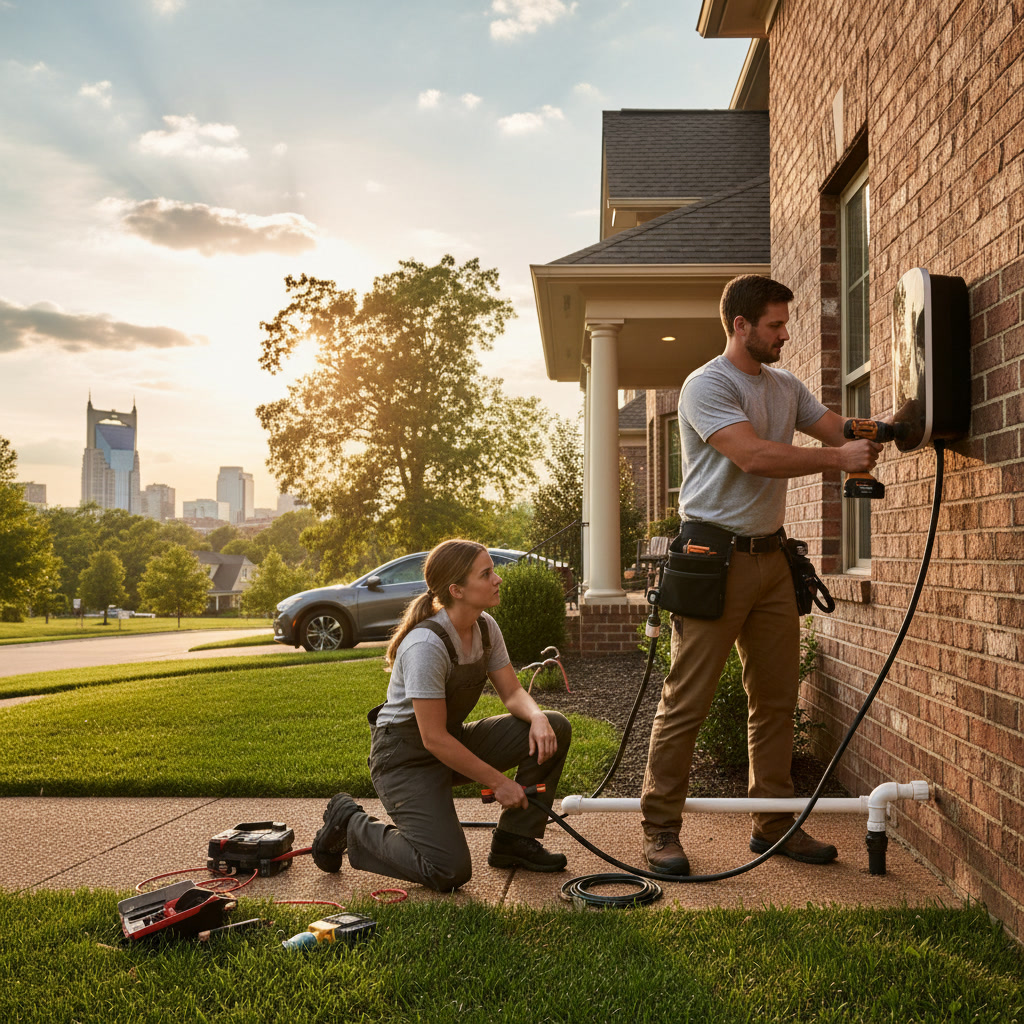
Most Nashville homeowners spend between $800 and $2,500 for a complete Level 2 charger installation. That range accounts for the equipment itself, labor, permits, and any minor electrical work needed to support the new circuit. Your actual cost may fall outside this range depending on how far your electrical panel sits from the installation location and whether your panel has capacity for the additional load.
This guide breaks down every cost factor so you know exactly what to expect when installing an EV charger in the Nashville area.
What Affects EV Charger Installation Cost
The final price for your EV charger installation depends on multiple variables. Some are within your control, others are determined by your home’s existing electrical infrastructure.
Charger type makes a significant difference. Level 1 chargers plug into standard 120-volt outlets and cost nothing to install if you already have an accessible outlet near where you park. However, they charge slowly, typically adding only three to five miles of range per hour. Most EV owners opt for Level 2 chargers that run on 240 volts and deliver 25 to 35 miles of range per hour.
The unit itself ranges from $300 to $1,200 depending on features like WiFi connectivity, scheduling capabilities, and cable length. Smart chargers with app control cost more upfront but offer better energy management.
Distance from your electrical panel to the installation spot affects labor and materials. Running a new 240-volt circuit 100 feet requires more conduit, wire, and labor than a 20-foot run. If your garage is on the opposite side of the house from your panel, expect higher costs.
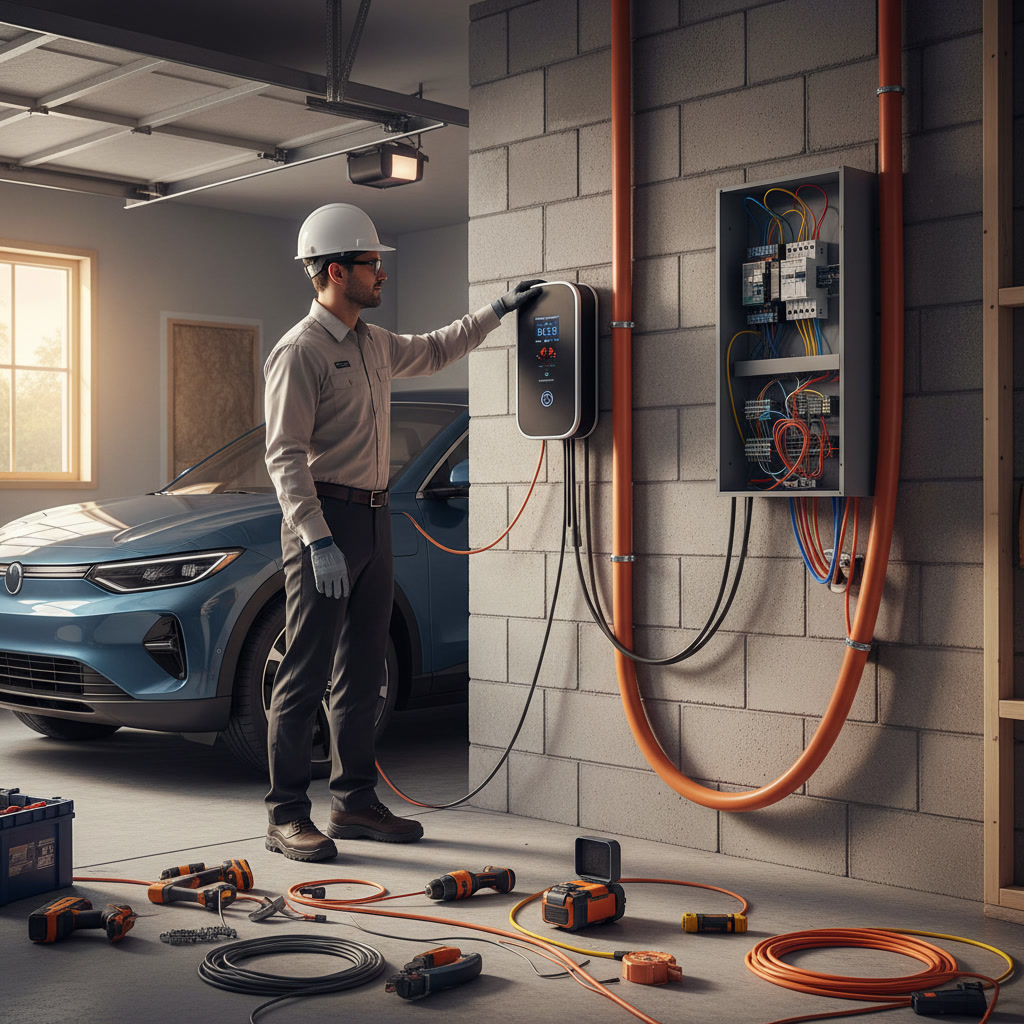
Panel capacity determines whether you need additional electrical work. Modern homes built in the last 20 years typically have 200-amp panels with room to add a 40 or 50-amp circuit for an EV charger. Older homes with 100-amp panels may need a full service upgrade before adding the charger load. An electrical service upgrade adds $1,500 to $3,500 to your project cost.
Permit and inspection fees in Nashville and surrounding areas typically run $50 to $150. Licensed electricians handle permit applications as part of the installation process. Skipping permits to save money creates liability issues and may violate local code.
Breaking Down the Cost Components
Understanding where your money goes helps you make informed decisions about your EV charger installation.
The Charging Unit
Entry-level Level 2 chargers from brands like ChargePoint, JuiceBox, and Grizzl-E start around $300 to $500. Mid-range units with smart features cost $500 to $800. Premium models with advanced load management and longer warranties reach $1,200.
Some electric vehicles come with a mobile charger that can operate at Level 1 or Level 2 with an adapter. If you already own one, you may only need the electrical work, not a separate wall-mounted unit.
Electrical Work and Labor
Licensed electricians typically charge $75 to $125 per hour in the Nashville area. A straightforward installation with a short circuit run takes three to five hours, totaling $375 to $625 in labor.
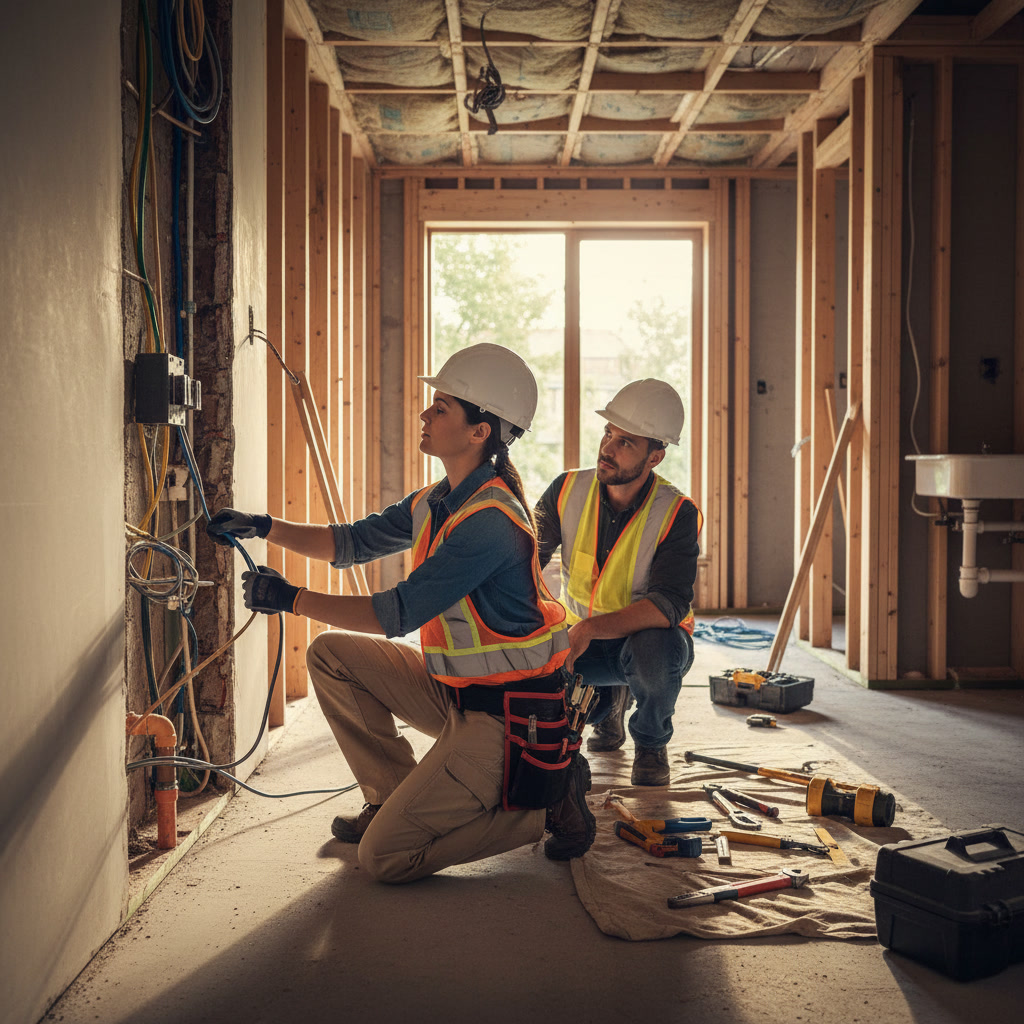
The work includes installing a dedicated circuit breaker in your panel, running appropriate gauge wire (typically 6 AWG or 8 AWG copper), mounting the charger, making final connections, and testing the system. If your installation requires running conduit through finished walls or underground to a detached garage, labor hours increase.
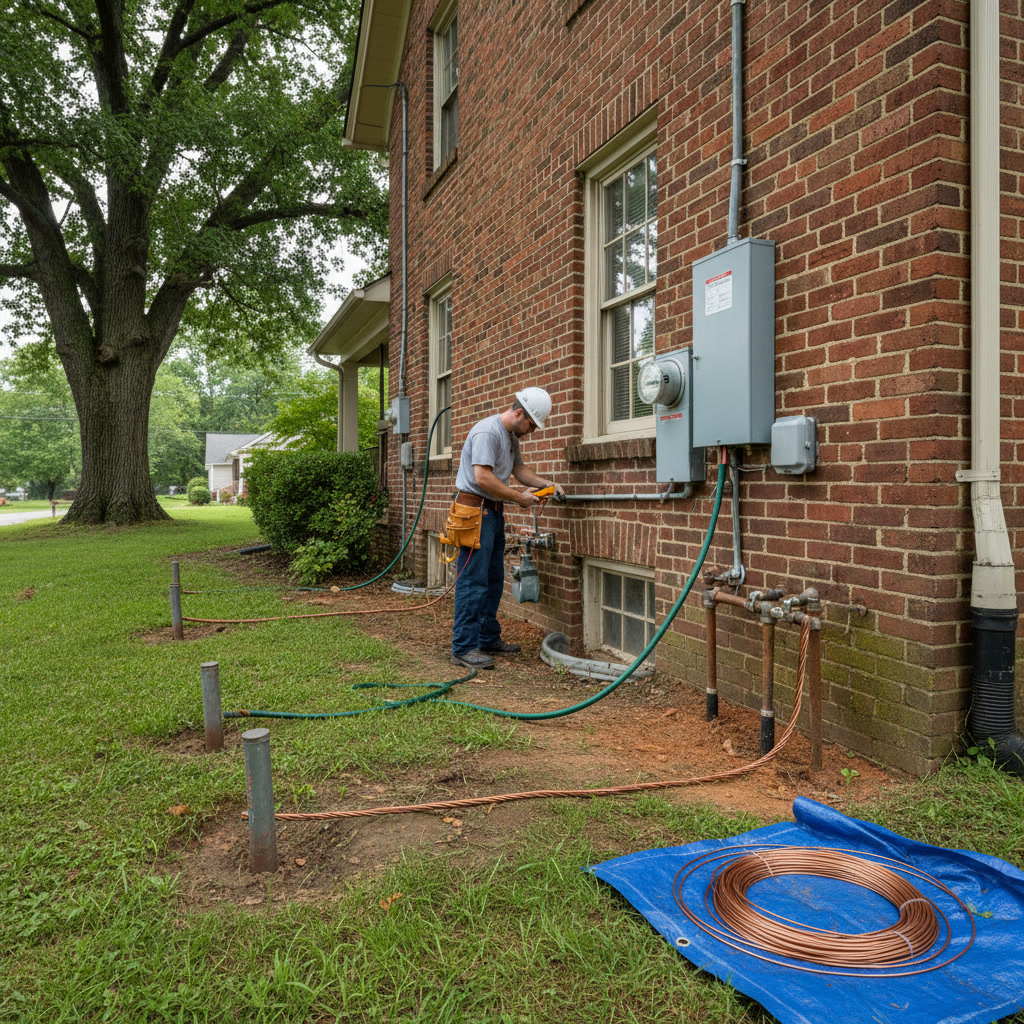
Many installations also require a grounding system installation or upgrade to meet current electrical code, adding $150 to $400 to the project.
Materials Beyond the Charger
Wire, conduit, breakers, and mounting hardware add $200 to $600 depending on run length. Copper wire prices fluctuate, but budget roughly $3 to $5 per foot for the gauge needed for EV charging circuits.
A dedicated 40 or 50-amp double-pole breaker costs $40 to $80. Outdoor-rated conduit, weatherproof boxes, and proper fittings add another $100 to $300 for exterior installations.
Pro Tip: Ask your electrician about wire routing options during your estimate. Running wire through an unfinished basement or attic costs significantly less than cutting into drywall and patching walls.
Nashville-Specific Installation Considerations
Local factors affect EV charger installation cost across the Nashville metro area. Homes in Franklin, Brentwood, and Belle Meade often feature detached or rear-entry garages that require longer wire runs.
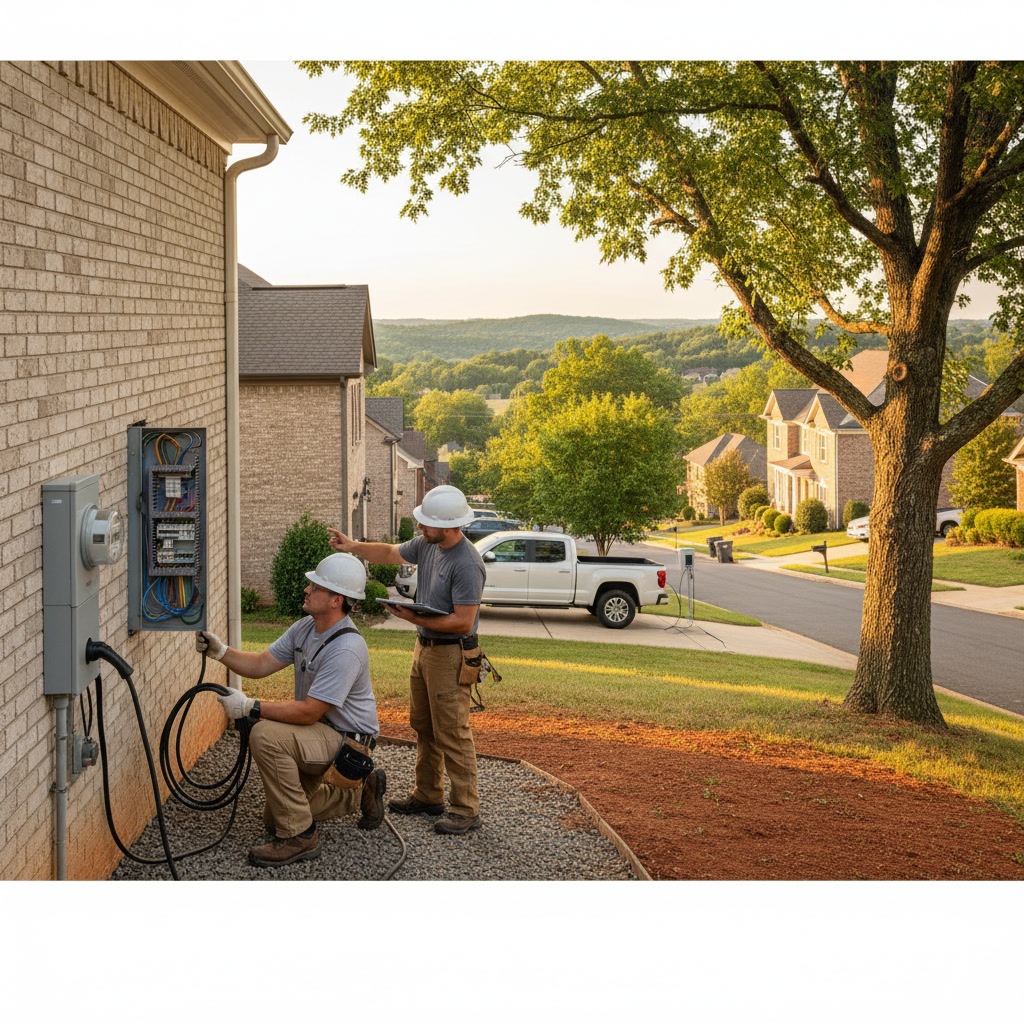
Older homes in established Nashville neighborhoods may have electrical panels that lack capacity for additional high-draw circuits. Before installing an EV charger, a qualified electrician should perform a load calculation to verify your panel can handle the additional amperage. This evaluation typically costs nothing when bundled with an installation quote.
Weather considerations matter for outdoor installations. While Tennessee winters are mild, summer heat and humidity require proper weatherproofing. Outdoor chargers need NEMA 3R or better rated enclosures, and exposed wiring must run through appropriate conduit.
HOA requirements in planned communities sometimes dictate charger placement or appearance. Check your association rules before selecting a location, especially if you live in a subdivision with architectural guidelines.
When Additional Electrical Work Increases Cost
Some homes need more than a simple circuit addition to support an EV charger safely.
If your home has a 100-amp service, you will likely need a service upgrade to 200 amps before adding a Level 2 charger. The math is straightforward. A 40-amp EV charger represents a significant continuous load. Combined with your HVAC, water heater, range, and other appliances, a 100-amp panel cannot safely supply power to everything at once.
Service upgrades involve replacing your meter base, main panel, and the service entry cable from the utility connection point. The utility company may also need to upgrade the transformer and service drop. Total costs run $2,000 to $4,000 for the electrical contractor’s portion, with utility work sometimes billed separately.
Similar to the cost considerations in our guide on electrical panel upgrades in Nashville, service upgrades require permits, inspections, and coordination with Nashville Electric Service or your local utility provider.
Panel upgrades differ from service upgrades. If you have adequate service capacity (200 amps) but your panel has no available breaker slots, you need a panel upgrade or subpanel installation. This costs $800 to $1,500 and takes less time than a full service upgrade.
Some older homes have aluminum wiring or outdated grounding systems that must be addressed before adding new circuits. These issues add cost but are necessary for safety and code compliance.
How to Keep Costs Reasonable
You can control EV charger installation cost without compromising safety or functionality.
Choose your charger location strategically. Installing the unit as close to your electrical panel as possible minimizes wire runs and labor. If your panel sits in your garage, mounting the charger on the same wall or an adjacent wall saves money.
Select appropriate amperage for your needs. A 40-amp circuit powers most home EV chargers effectively. Unless you drive several hundred miles daily and need maximum charging speed, a 50 or 60-amp circuit may be overkill and costs more to install.
Consider hardwired versus plug-in units. Hardwired chargers connect directly to the circuit and typically cost slightly less to install because they do not require a separate outlet box. Plug-in units with NEMA 14-50 outlets offer flexibility if you want to unplug the charger for any reason.
Bundle work if you are planning other electrical projects. If you already need an electrical panel upgrade or other electrical work, adding the EV charger circuit during the same service call reduces overall costs.
Key Takeaway: Get a detailed written estimate that breaks down equipment, labor, materials, and permits separately. This transparency helps you understand where your money goes and compare quotes accurately.
Incentives and Rebates That Lower Your Cost
Federal and local incentives can offset EV charger installation cost significantly.
The federal Alternative Fuel Vehicle Refueling Property Credit offers up to 30% of the installation cost, capped at $1,000 for residential installations. This tax credit applies to hardware and installation labor. Check current IRS guidelines or consult your tax professional, as credit availability and amounts change.
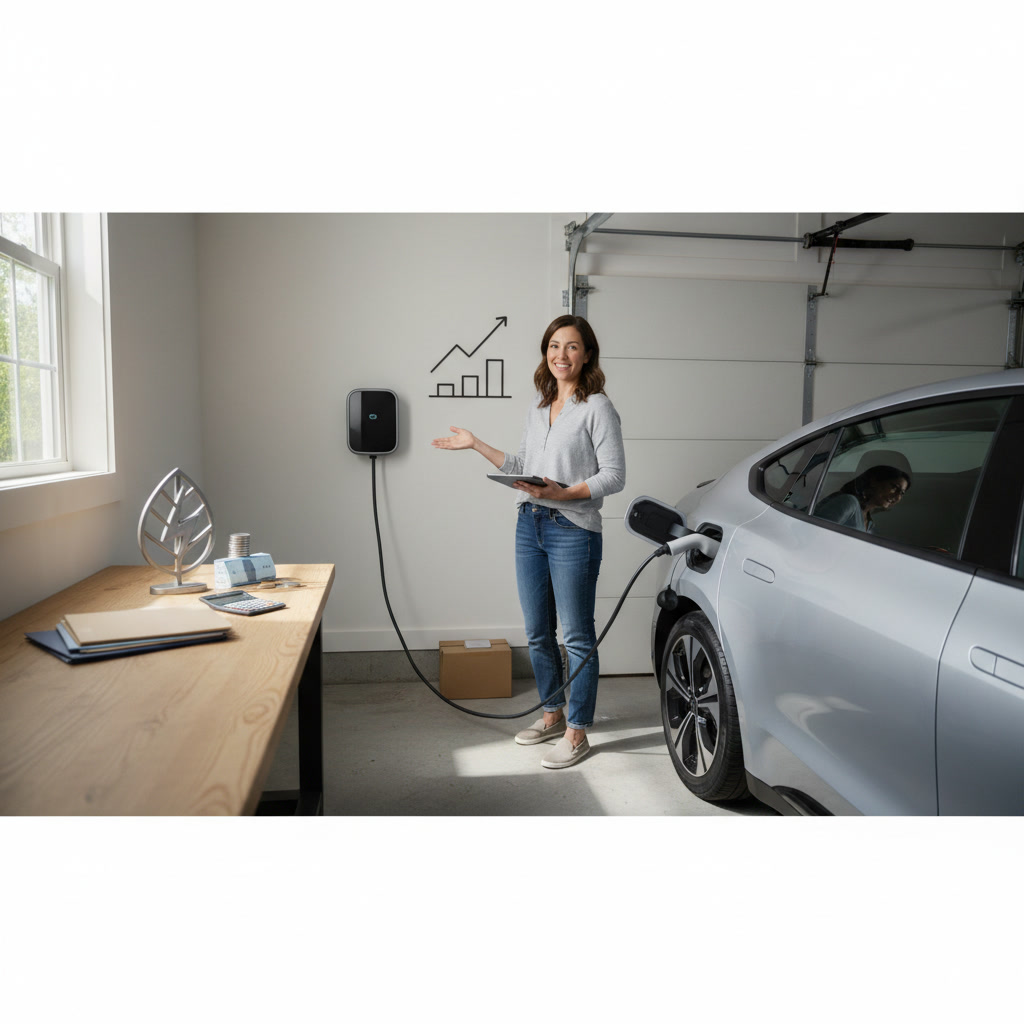
Tennessee Valley Authority (TVA) and local power companies sometimes offer rebates for home EV charger installations. Nashville Electric Service has run programs in the past, though availability varies. Contact your utility provider to ask about current offers.
Some EV manufacturers include installation credits with vehicle purchases. These credits typically range from $500 to $1,000 and apply toward professional installation costs.
Time-of-use electricity rates can save money long-term by charging your vehicle during off-peak hours when electricity costs less. While this does not reduce installation cost, it lowers your ongoing charging expenses.
Choosing the Right Electrician for Your Installation
Selecting a qualified, experienced electrician ensures your EV charger installation meets code and functions reliably.
Verify licensing and insurance before hiring anyone. Tennessee requires electrical contractors to hold proper licenses, and reputable companies carry liability insurance and workers compensation coverage. Black Cat Electric and Plumbing is licensed, insured, and veteran-owned, serving Nashville and surrounding areas including Murfreesboro, Spring Hill, and Clarksville.
Ask about EV charger installation experience specifically. While any licensed electrician can install a 240-volt circuit, those with EV charging experience understand load management, proper charger placement, and common installation challenges.
Request itemized quotes from at least two contractors. Compare not just total price but also what each quote includes. Some quotes bundle permits and materials, while others list them separately.
Read reviews and ask for references. Installation quality matters for safety and longevity. Poor workmanship can create fire hazards or damage your vehicle’s charging system.
Frequently Asked Questions
Can I install an EV charger myself to save money?
Tennessee law requires licensed electricians to perform electrical work including EV charger installations. DIY installations violate building codes, create safety hazards, void equipment warranties, and may cause problems when selling your home. Professional installation ensures code compliance and safe operation.
How long does EV charger installation take?
Most installations take three to six hours for straightforward setups. Complex installations requiring panel upgrades, long wire runs, or challenging routing may take a full day or require two visits. Your electrician can provide a time estimate during the initial consultation.
Do I need a separate circuit for my EV charger?
Yes, electrical code requires EV chargers to have dedicated circuits. These high-draw appliances cannot share circuits with other devices. A dedicated circuit ensures safe operation and prevents overloading your electrical system.
Will an EV charger increase my home value?
Professionally installed EV chargers typically add value for buyers who own or plan to own electric vehicles. The appeal is strongest in areas with high EV adoption rates. Proper installation with permits and inspections ensures the improvement is documented and transferable.
What size circuit do I need for my EV charger?
Most residential Level 2 EV chargers require 40 or 50-amp circuits. Your specific needs depend on your vehicle’s onboard charger capacity and how quickly you need to charge. A 40-amp circuit provides 30 to 35 miles of range per hour for most EVs, which is sufficient for overnight charging.
Planning Your EV Charger Installation
Understanding EV charger installation cost helps you budget appropriately and avoid surprises during your project. Most Nashville homeowners invest between $800 and $2,500 for a complete Level 2 installation, though costs vary based on your home’s electrical system and installation location. Panel upgrades, long wire runs, and premium charger features increase the total, while strategic planning and available incentives can reduce your out-of-pocket expense.
Working with experienced, licensed professionals ensures your installation meets code requirements and operates safely for years. Black Cat Electric and Plumbing provides transparent pricing and quality installations throughout Nashville and surrounding areas. If you are ready to discuss your EV charger installation or need a detailed estimate, call (615) 479-0327 to schedule a consultation.